
Insights That Drive Business Smarter Forward
If you own a flat in an Edinburgh tenement, your gutters probably aren't something you think about much. They sit up there, out of sight, doing their job quietly — until they stop.
When they do stop, the consequences tend to be expensive. Water finds its way into places it shouldn't.
Stonework stains. Damp patches appear on internal walls. And what started as a blocked gutter becomes a much bigger conversation about repairs.
The good news is that tenement gutter cleaning is straightforward, affordable, and one of the best things you can do to protect your building. Here's what you need to know.
Why Tenement Gutters Block More Than You'd Expect
Edinburgh tenements are typically four or five storeys high, surrounded by mature trees, and built with deep, enclosed rooflines that catch debris from every direction.
Leaves, moss, and general organic build-up accumulate faster than on a standard house. Because the gutters are high up and shared across a stair, nobody tends to notice until something goes wrong.
Cast iron guttering, which is common on older tenements, is particularly susceptible. The joints between sections can hold debris and moisture, and once rust takes hold, the problems compound. What starts as a blockage can accelerate the deterioration of the gutter itself.


What Happens When Gutters Are Left Blocked
This is where it's worth being direct. A blocked tenement gutter isn't just an inconvenience — it's a slow drip of damage that gets worse every time it rains.
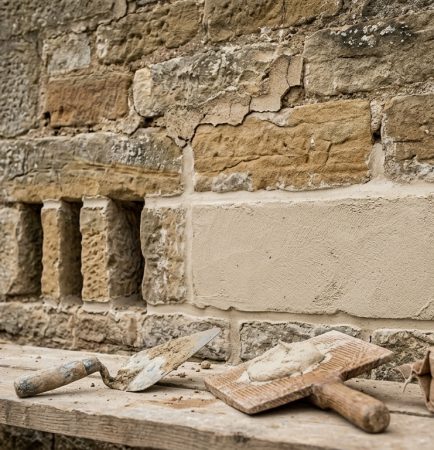
Stonework damage. Edinburgh sandstone is porous. When water overflows a blocked gutter and runs repeatedly down the face of a tenement, it erodes mortar joints, stains the stone, and accelerates the kind of decay that eventually requires significant stonework repairs.
Damp on internal walls. Persistent water running down an external wall will find its way in. Damp patches, efflorescence, and eventually mould on internal walls are common symptoms of a gutter problem that's been ignored.
Structural bracket failure. Cast iron gutters are heavy, and when they're full of wet debris and water they're heavier still. Over time this puts pressure on the brackets fixing the gutter to the building. Sagging gutters, and eventually fallen sections, are a direct consequence.
Roof damage. When water can't drain freely through the gutter and downpipe, it can back up under slates and into the roof void — adding a roof repair to what was originally a gutter problem.
How Often Should Tenement Gutters Be Cleaned?
Twice a year is the standard recommendation. Once in late autumn after the leaves have fallen, and once in spring to clear the moss and debris that builds up over winter.
For tenements surrounded by trees, or buildings with a history of gutter problems, annual cleaning at minimum is essential.
For buildings with cast iron guttering in an ageing condition, it's worth having a closer look at the state of the gutters each time they're cleaned, not just clearing the blockage.
Why Rope Access Makes Sense for Tenements
A standard house gutter can be reached with a ladder. A four-storey tenement cannot, at least not safely, and not practically.
The traditional solution was scaffolding, which means cost, planning, disruption to residents, and typically several weeks of lead time. For a straightforward gutter clean, it's disproportionate.
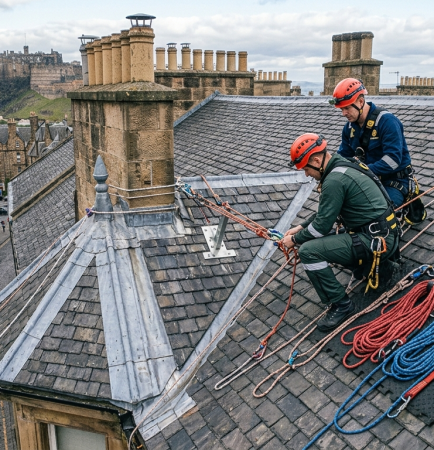
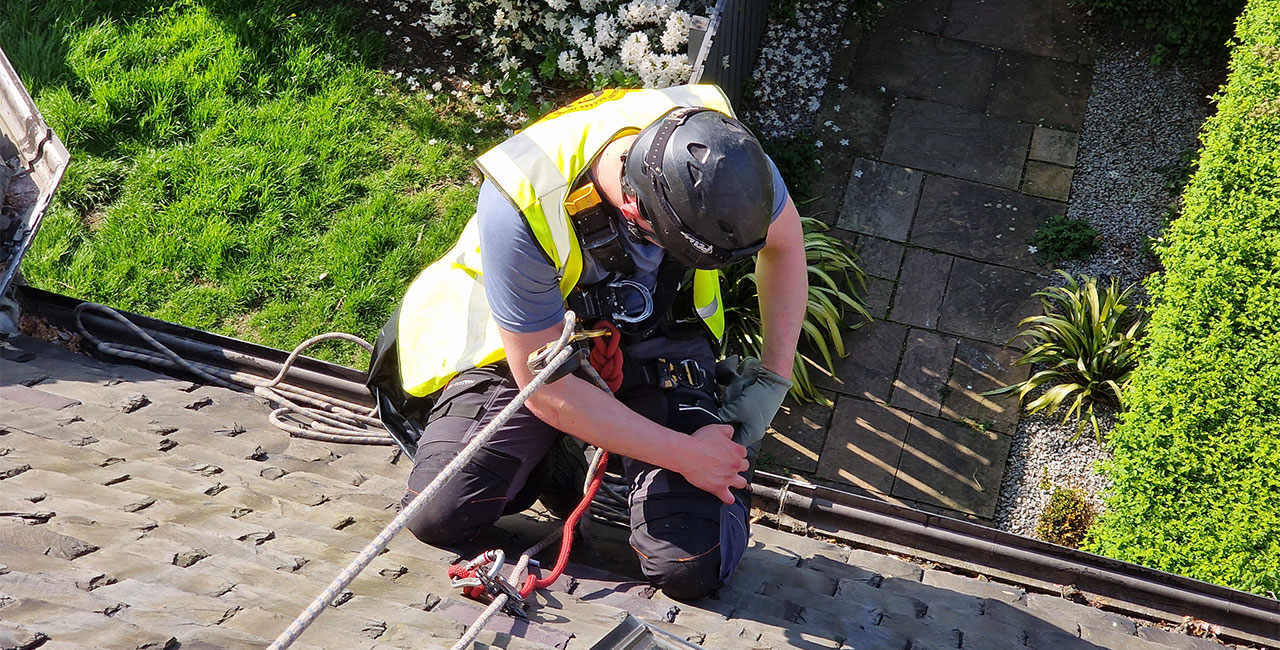
Rope access gives trained technicians the ability to work at height safely and efficiently, without scaffolding and without cherry pickers.
For tenement gutter cleaning in Edinburgh, it's now the standard approach used by specialist contractors It's significantly more cost-effective than the alternatives.
It also means that while a technician is at the gutter level, they can photograph the roof condition and flag any issues they can see.
That kind of visibility is genuinely useful for tenement owners who otherwise have no easy way of knowing what's happening up there.
What to Look For in a Gutter Cleaning Contractor
Not all gutter cleaning is equal, particularly on older tenements. A few things worth checking:
Working at height qualifications. Rope access work requires specific training and certification. Ask whether technicians are IRATA-qualified or hold equivalent at-height accreditation.
Insurance. Public liability insurance is non-negotiable. For work on a shared tenement, it matters.
Condition reporting. A good contractor will tell you what they find, not just clear the blockage. If there are issues with brackets, joints, or downpipes, you want to know.
Experience with older buildings. Cast iron guttering requires a different approach to uPVC. Contractors familiar with Edinburgh tenements will understand the material and the typical failure points.
The Bigger Picture
Gutter cleaning sits within a broader maintenance rhythm for any tenement. Gutters, downpipes, stonework, and roofing are all connected. Damage in one area tends to show up in another if it's left long enough.
At SAT, gutter cleaning is part of the rainwater goods work we carry out on Edinburgh tenements, townhouses, and commercial properties.
We use rope access throughout, and we record what we find. Giving building owners a clear picture of condition over time, not just a one-off clean.
If you're not sure when your tenement gutters were last cleaned, or you've noticed water marks on the stonework, it's worth getting them looked at before the next heavy rain.