
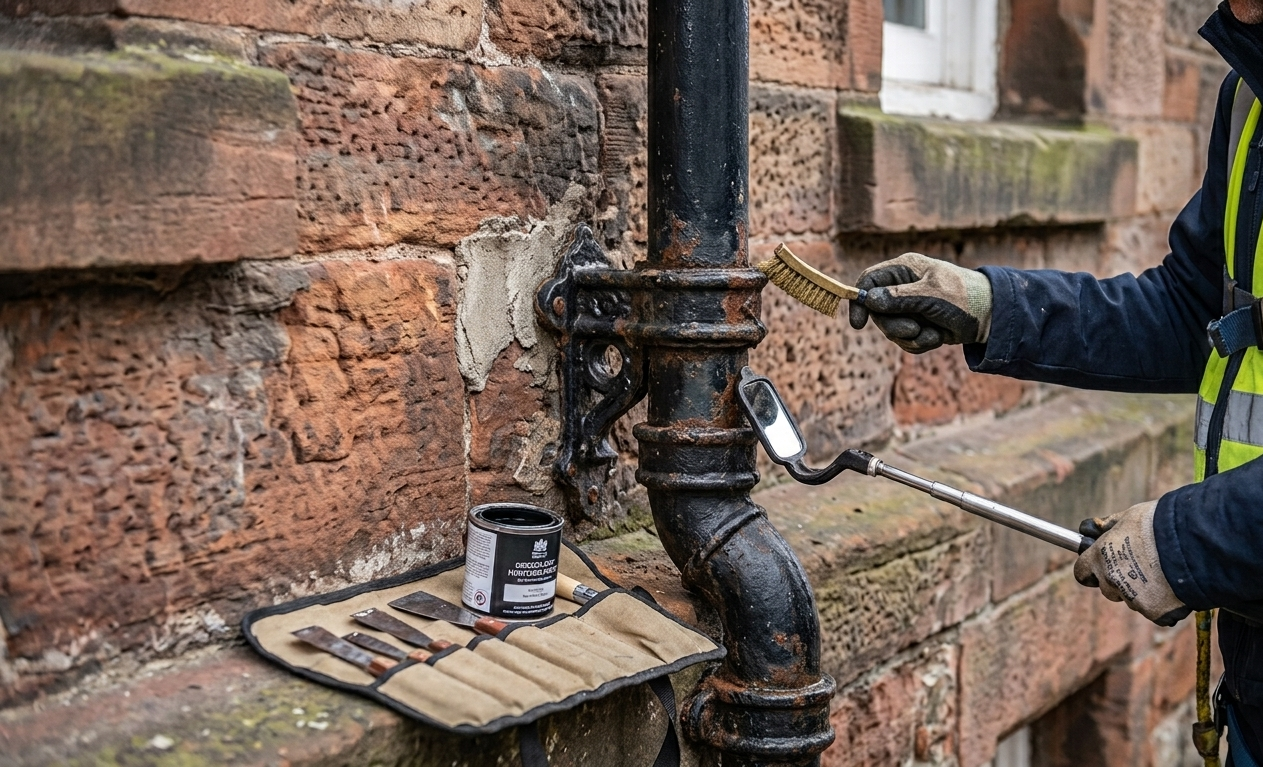
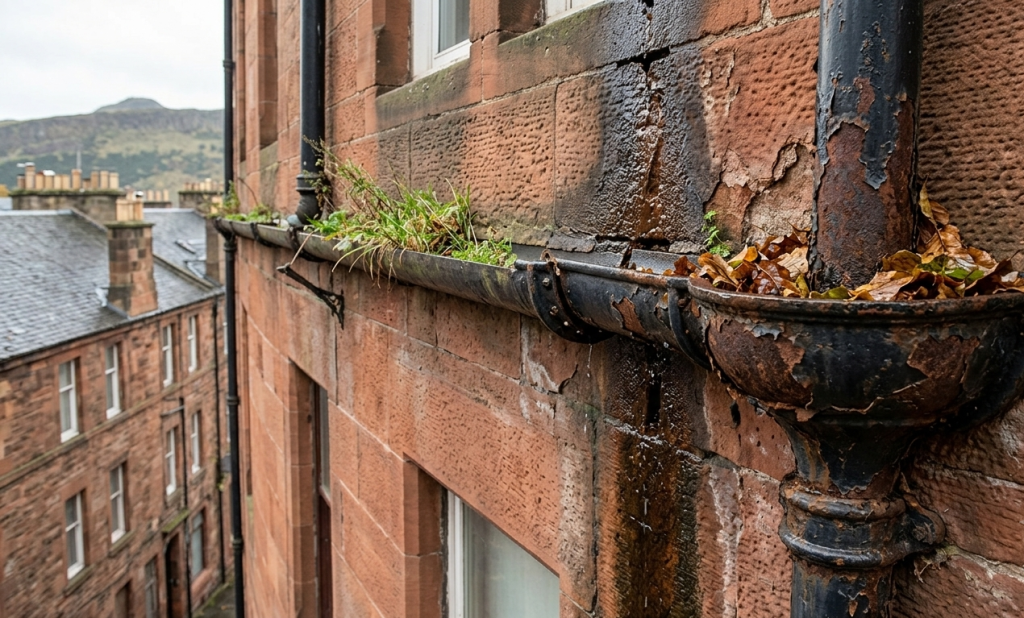
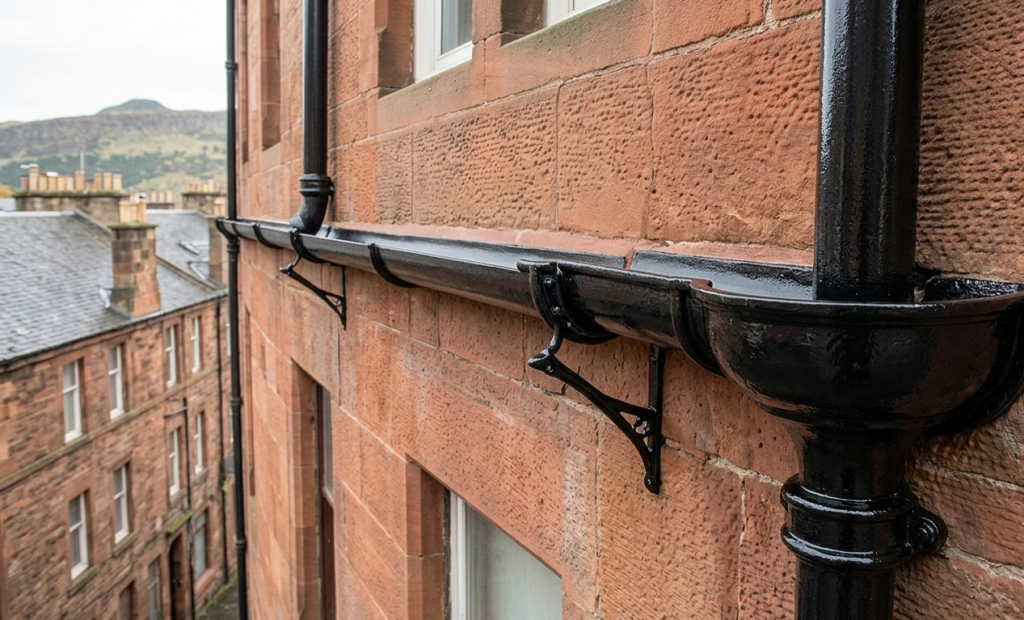
Cast Iron Downpipe Maintenance for Edinburgh Buildings is a practical subject for anyone responsible for an older property in Edinburgh. The city’s tenements, townhouses, listed buildings and hotels are exposed to wind, rain and seasonal temperature changes, while many of the most important areas are difficult to see from ground level. Cast iron rainwater goods can last for decades when maintained, but failed coatings, leaking joints and loose brackets allow corrosion and water damage to develop gradually.
Common points of failure
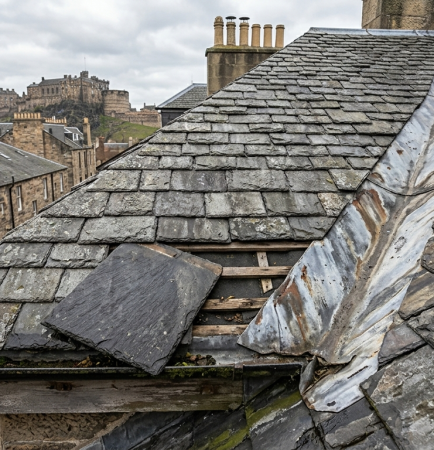
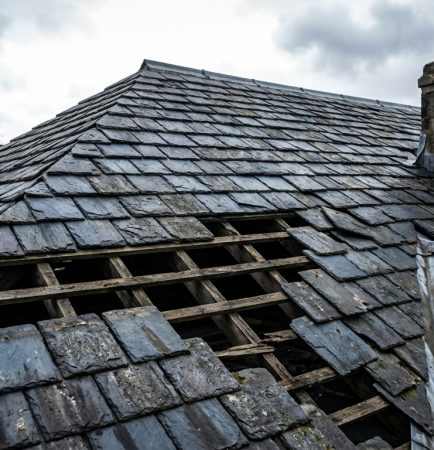
The first step is to look at the building as a connected system. A roof defect can affect masonry below it; a blocked outlet can keep stonework wet; and a small opening around a junction can allow water to travel before it becomes visible indoors. This is why a close, methodical assessment is more useful than relying only on the location of a stain or a photograph taken from the pavement.
For shared buildings, the scope should be clear enough for owners or managers to understand. It should identify the area being reviewed, the visible condition, any immediate risks and whether further access or testing is required. This creates a sensible basis for decisions instead of turning every concern into a large, undefined project.
Why brackets and joints matter
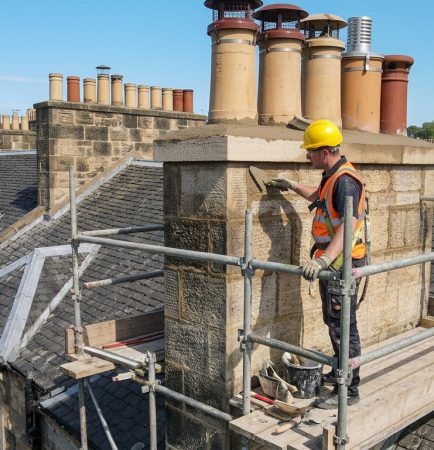
Specialist access can bring the technician close to the relevant roof, facade or rainwater detail. From that position, the team can inspect joints, fixings, surfaces, edges and transitions that may not be visible from below. Close access also makes it possible to photograph the exact defect and, where the scope allows, complete minor work during the same visit.
The access method should always be selected for the task and building. Rope access is particularly useful where the work is targeted, the street is busy, the rear elevation is constrained or conventional equipment would create significant disruption. Larger or longer-duration projects may require a different arrangement. A responsible contractor explains the reasoning rather than treating one method as suitable for every job.
Cleaning, repair and recoating
The most useful outcome is not simply that someone attended the property. Owners and factors need a record showing what was inspected, what was found, what action was taken and what should happen next. Before-and-after photographs, defect locations and clear recommendations help residents understand work on areas they cannot safely view themselves.
Priorities should be proportionate. Immediate safety concerns and active water entry come first. Defects likely to worsen should be planned within an appropriate timeframe. Stable weathering or low-risk items may only need monitoring. This approach protects the building without encouraging unnecessary work.
Concerned about a roof, stonework, gutter or high-level building defect? Contact Specialist Access Technicians to arrange an honest assessment of your Edinburgh property.