
Insights That Drive Business Smarter Forward
A roof inspection in Edinburgh is something most flat owners know they should arrange, but often don't, until something goes wrong.
By then, what might have been a minor repair has usually become a more expensive one, shared across a stair of owners who'd all rather not be having that conversation.
Getting ahead of it is straightforward. But if you've never had one done, it's not always clear what's involved, what you're paying for, or what a good report should actually tell you.
This is a plain guide to how it works.
What Makes a Roof Inspection in Edinburgh Different
A standard domestic roof can usually be assessed from ground level with binoculars, or from a ladder. A four or five-storey Edinburgh tenement is a different proposition entirely.
The roof sits behind parapet walls. Gutters are cast iron, high up, and inaccessible without proper at-height equipment.
Chimney stacks project well above the roofline and are subject to weathering, cracking, and mortar failure that simply can't be seen from the street.
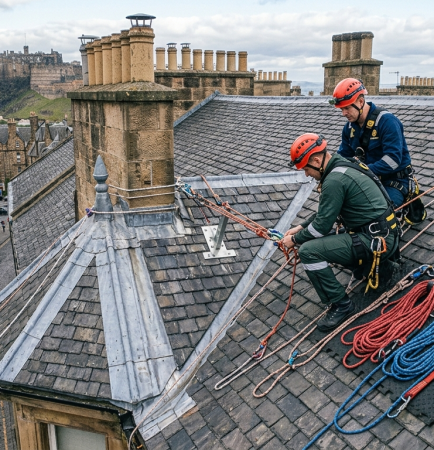
This is why a roof inspection in Edinburgh, on an older tenement at least, is typically carried out by rope access technicians rather than surveyors working from ground level or a cherry picker.
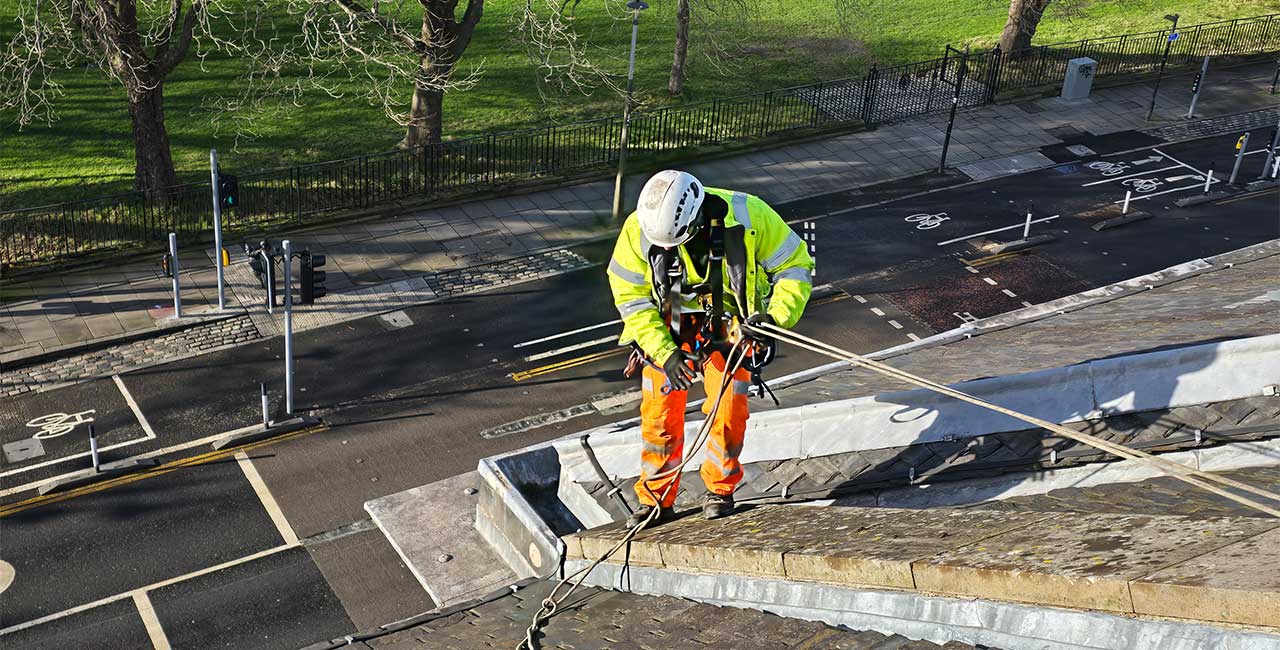
Rope access allows a trained operative to move across the roof safely, get physically close to the areas that matter, and photograph defects in detail.
You get an accurate picture of actual condition, not an educated guess from 20 metres below.
What a Roof Inspection in Edinburgh Should Cover
A thorough inspection should assess all of the following:
Slating and roofing material. Slipped, cracked, or missing slates are the most common finding on older Edinburgh tenements. The inspection should identify the extent of any damage, whether it's isolated or systemic, and what repair is required.
Ridging and verges. The ridge line along the top of the roof and the verge details at the edges are vulnerable to mortar failure and movement. Loose or open ridging is a direct water ingress risk.
Chimney stacks. Pointing, flashings, chimney pots, and haunching all deteriorate over time. Chimneys are a common source of both water ingress and falling masonry — one of the more serious consequences of deferred maintenance on Edinburgh's older buildings.
Lead flashings. Where the roof meets a vertical surface — chimney bases, parapet walls, dormers — lead flashing provides the waterproof seal. Failed or lifted flashing is a frequent cause of internal damp that gets misdiagnosed as a wall problem.
Parapet walls and coping stones. Parapet walls are exposed to wind and frost on both faces. Coping stones can loosen and, in the worst cases, fall. The inspection should assess pointing condition and the security of individual stones.
Rainwater goods. Gutters, brackets, downpipe connections, and outlets at roof level should all be checked for condition, alignment, and blockage. This is a condition assessment — separate from a gutter clean.
Roof structure where visible. If there's access to the roof void, any signs of rot, movement, or water damage should be noted.
What a Good Roof Survey Report Should Include
The inspection itself is only useful if what's found is properly recorded. A good roof survey report should give you:
Photographs of every defect. Not just written descriptions — actual images showing the location and nature of each problem. This matters when discussing repairs with neighbours, getting quotes, or deciding on priorities.
Clear condition ratings. Each element should be assessed — good, monitor, repair required, or urgent. Vague language like "some deterioration noted" isn't helpful. You need to know what needs doing now and what can wait.
Repair recommendations. What work is required for each defect, and approximately what that involves. It doesn't need to be a fixed price, but it should give you enough to have an informed conversation with a contractor.
A reinspection recommendation. Good reports tell you when to look again. Annual inspections are typical for older Edinburgh tenements; buildings in stable condition can sometimes go longer between checks.
Why Rope Access Makes the Difference
A ground-level survey or drone inspection gives a broad overview but can't get close enough to assess mortar joints, check flashing laps, or confirm whether a slate is cracked or just dirty.
A cherry picker can get a technician to height, but it's slow, expensive, needs street space, and often can't reach every part of a tenement roof.
Rope access technicians rig from the roof itself, move freely across the surface, and inspect every element at close range.
For a tenement in an Edinburgh New Town terrace or Old Town close, it's often the only practical way to do the job properly.
It also means minor repairs can happen at the same visit. If a slate is loose and a technician is already on the roof, fixing it then and there avoids a second mobilisation.
How Often Should You Arrange a Roof Inspection in Edinburgh?
Annual inspections are the standard recommendation for Edinburgh tenements built before 1919. Scottish weather, older materials, and shared ownership all make staying on top of condition important.
At a minimum, an inspection after severe weather — prolonged frost, high winds, heavy snow — is sensible. These events accelerate existing defects and can create new ones quickly.
If your building hasn't had a professional roof inspection in several years, or you've noticed water marks, damp patches, or loose material at ground level, getting one arranged sooner rather than later is the right call.
A Note on Shared Costs
Under the Tenements (Scotland) Act 2004, the cost of maintaining and repairing a shared roof falls equally across all flat owners in the stair. That can make organising things complicated — you need agreement from neighbours, a way of collecting payments, and a contractor experienced with shared ownership situations.
At SAT we work with individual flat owners and property factors across Edinburgh, and we're used to navigating the shared repairs process.